UU the Vote invites everyone to join us for a week of action to harvest the power! Running Wednesday, October 21st through Tuesday, October 27th, this is one of our final pushes to ensure we reach 2,000,000 voters before Election Day. Join us! Congregational Call-in Days: October 21 – October … [Read more...]
Before eviction moratoriums expire, WA renters and landlords need help
Tim Thomas, research director of the Urban Displacement Project at University of California Berkeley, has studied eviction patterns in King County. He and his colleagues found that the variables predicting high eviction rates are racial diversity, specifically how Black or Latinx a neighborhood is, … [Read more...]
How to Unite the Fight for Racial Equity and Environmental Action
This past year has been one of radical awareness for society. As we collectively wake up to tragic realities—from entrenched racial injustice to the increasing irreversibility of the climate crisis—we do not have to choose between which fight we join. The time is now for individuals, governments, … [Read more...]
Harvest the Power 2020-Commit to a Season of Collective Action and Faith Formation
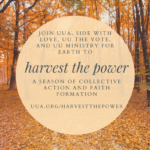
On October 1st, the Harvest Moon will rise shortly after sunset in the Northern Hemisphere. This burst of evening light provides an extended time for farmers to harvest summer crops and plant new seeds for the Fall Season. What and how have you grown this summer --- personally, in connection to … [Read more...]
The Forgotten Boy at Carlsbad Caverns
When my colleague Jerry first learned about Carlsbad Caverns National Park, he came across a tale about the caverns’ discovery. A 16-year-old named James White and a “Mexican friend” climbed down a hole in the ground in 1898, he learned, and the two began mapping one of the largest cave systems in … [Read more...]
Judge says 2020 census must continue for another month
A federal judge has stopped the 2020 census from finishing at month's end and suspended a year-end deadline for delivering the numbers needed to decide how many seats each state gets in Congress. The preliminary injunction granted by U.S. District Judge Lucy Koh in California late Thursday orders … [Read more...]
Sunrise Seattle Hub Strategy Session, Sept. 26, 2020, Online
This Saturday, September 26th from 5-8pm, Sunrise Seattle will be holding a hub strategy session. If you have an interest in helping our hub to craft a strategy for the months leading up to January 2021, we would love for you to join us! You can register here. Why: We’ve done amazing work since … [Read more...]
Food Justice Film Festival 2020

Food is a big deal and the films presented in this festival will reveal the link between environmental injustice, climate change, food insecurity and white supremacy. The award-winning films will include "Gather," "Invisible Vegan," "Dolores" and "Urban Root". In addition the films, there will be … [Read more...]
As WA restaurants struggle, workers weigh physical and economic survival
By the end of April, nearly 200,000 leisure and hospitality workers across the state (more than half of the sector’s workforce, which is disproportionately made up of women and people of color) had lost their jobs, and employment levels in the sector are still down 32%, compared with 25.6% … [Read more...]
Seahawks cancel practice. Pete Carroll demands whites finally listen to Black People
For more than 14 minutes, Seattle’s 68-year-old coach didn’t say one word about football or training camp or the upcoming opening game just two weeks and one day away—other than to mention he’s been coaching “since I was 13 years old coaching Pop Warner kids” in Marin County, California. For 14 … [Read more...]
Training Court Watchers for Flood of Eviction Cases
Elizabeth Maupin of Issaquah/Sammamish Interfaith Coalition writes: I have been in touch with the Seattle University Law School and the Housing Justice Project about training and placing court watchers in the King County eviction courts. Once the moratorium ends there will likely be a tsunami of … [Read more...]
Stand in Support of Black Lives Matter

Friday, August 21, 2020 at 3:30 PM – 4:30 PM City of Port Orchard Government Public · Hosted by Kitsap Unitarian Universalist Fellowship As part of our congregational commitment to dismantle white supremacy, Kitsap UU Fellowship is dedicated to the … [Read more...]
TRUMP’S CFPB DEPLOYS PREDATORY LENDERS AS FIRST RESPONDERS TO PANDEMIC
Small-dollar lenders, such as Speedy Cash and TitleMax, intentionally design high-cost, low-quality products to make it almost impossible for borrowers to repay their loans under the original terms. Finance fees and average annual interest rates of 400 percent prevent most borrowers from repaying … [Read more...]
Ongoing coverage of protests for racial justice in the Seattle area
Demonstrations and protests for racial justice continue in western Washington. The rallying cry of these protests has been to defund the police. Here's what that means. Headlines for today include: Seattle Police Chief Carmen Best resigns Federal judge rejects attempt to enforce Seattle … [Read more...]
The environmental movement is very white. These leaders want to change that.
[James] He is one of a growing group of young, diverse environmental leaders examining how racism and white supremacy have long excluded Black, brown, and Indigenous people in environmental policy, conservation, and public health issues. Their work comes as environmental groups have begun publicly … [Read more...]
John Muir: The godfather of Seattle’s spiritual life — and a racist
We are living in a time of moral reckoning with the past. Beyond Confederate monuments and memorials, people are also reevaluating the work, beliefs and reputations of progressive figures. . . . . There has long been a critique in academic circles — and, more recently, in journalistic … [Read more...]
Systemic racism explained: Four dimensions of racism and how to be part of the solution
Racism takes many forms. Before we can be part of the solution, we first have to understand the problem. The CEO of Portland’s Center for Equity and Inclusion, Hanif Fazal, and the CEO of North Star Forward Consulting, Lillian Green, have dedicated their careers to empowering the community … [Read more...]
Most VA workers see racism against colleagues and veterans, union survey finds
Nearly 80 percent of Veterans Affairs employees surveyed by their workers union in July said endemic racism within the federal government’s second-largest organization is a moderate or serious problem, with more than half reporting they have witnessed discrimination against the veterans whom the … [Read more...]
Seattle City Council expected to approve controversial cuts to SPD
Despite pushback from Seattle Mayor Jenny Durkan, Police Chief Carmen Best, police unions and thousands of pro-police community members and concerned residents, the Seattle City Council is expected to approve initial cuts to the Seattle Police Department in a final vote on its 2020 re-balancing … [Read more...]
‘Not A Person Whatsoever’: Michigan County Official Defends Use Of N-Word Facebook Twitter Flipboard Email
A county official in Michigan is defending his use of the N-word — by repeatedly saying the slur, and insisting that it does not imply he is a racist. Leelanau County Road Commissioner Tom Eckerle has been facing calls to resign since Tuesday, when he reportedly used one of the most taboo words … [Read more...]
- « Previous Page
- 1
- 2
- 3
- 4
- 5
- …
- 10
- Next Page »