
To: Seattle Children's Board of Trustees and Carolyn Down Community Health Clinic Board of Directors We entrusted Seattle Children's and Country Doctor with health and lives of Black and Brown families and you have failed them. You have neglected to uphold the very reasons that Odessa Brown and … [Read more...]
Hidden Barriers
Bias, prejudice and discrimination pervade our health care systems. Explore the issues and meet the stakeholders attempting to change that. Unchecked stereotypes can influence medical treatment, leading to dangerous consequences for Black patients. Crosscut dives into some of the … [Read more...]
Learn About Black History in 7 Unexpected Places
National parks preserve the legacies of visionaries such as Martin Luther King Jr., Harriet Tubman, Frederick Douglass and Booker T. Washington, as well as landmark sites in the struggle for equality, including the Brown v. Board of Education and Little Rock Central High School National Historic … [Read more...]
A podcast about defunding the police and rethinking public safety
After George Floyd was killed by police in Minneapolis last May, anti-racism protests exploded across the nation and presented Seattle city leaders with an existential question they are still trying to answer: How might the city rethink public safety while keeping the city safe and eliminating … [Read more...]
School to Prison Pipeline Action Group Needs your Help
The Interrupting the School or Prison Pipeline group is exploring bystander intervention training opportunities that JUUstice Washington might offer to congregations. We are checking various options and there are a couple of training opportunities coming up in February that help this … [Read more...]
New Washington Black Lives Matter Alliance lobbies for changes that go far beyond police reform
The marble hallways of Washington’s Capitol have long been well stocked with powerful interest groups, from businesses and industry associations, to labor unions and environmentalists. Now, as state lawmakers gather remotely for the legislative session, a new statewide advocacy group is joining … [Read more...]
Finding Humanity Podcasts

To unpack some of the biggest threats humanity is grappling with today, each episode will draw on the expertise and life experiences of members of The Elders: former Presidents and Prime Ministers, UN officials, Nobel Peace Laureates, freedom fighters, and human rights champions, brought together by … [Read more...]
GROW Fellowship for Young Adults of Color – Apply by February 1, 2021
Apply for the GROW Fellowship by February 1! Young Adults are invited to apply for the upcoming GROW Fellowship, a collaboration between the UU College of Social Justice and the UUA's Thrive Program for Young Adults of Color. Building on past sessions of GROW (Grounded and … [Read more...]
Transportation Justice is Racial Justice
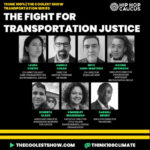
Check out this great series, The Coolest Show, featuring the voices of many Backbone and Solutionary Rail partners who are doing essential work and connecting the dots on trucking and transportation justice. Hear from those on the frontlines of transportation injustice, and learn why solutions must … [Read more...]
Hazardous Homes
An EPA analysis obtained by APM Reports and The Intercept found that more than 9,000 federally subsidized properties — many with hundreds of apartments or townhouses — sit within a mile of Superfund sites. Those properties are in 480 cities in 49 states and territories. But even that is an … [Read more...]
What I Know About the Ocean We Need Ocean Justice
Here is what I know. The ocean is not separate from us or our daily concerns. It is our nourishment, protection, livelihood, and the air we breathe. It is culture, joy, and freedom. All this is at risk, and we need ocean justice. Ocean conservation is about people—more specifically, it’s about … [Read more...]
A NEW BILL AIMS TO END POLICE RAIDS LIKE THE ONE THAT KILLED BREONNA TAYLOR
THE POLICE KILLING of Breonna Taylor, who was fatally shot in Kentucky in March when plainclothes officers barged into her apartment in the middle of the night, has set off a series of state and local efforts to ban “no-knock” raids — the police practice of breaking into someone’s home unannounced … [Read more...]
David Suzuki: It’s time for Canada to address environmental racism
In Canada, we’re quick to favourably compare ourselves to our southern neighbours. COVID-19 caseloads may be at an all-time high here, but the U.S. situation is even more dire. Canada hasn’t managed to curb carbon emissions, but the U.S. abandoned emission reduction targets when it pulled out of the … [Read more...]
Black-Led Public Safety Solution Process
On December 14th, incredible researchers from the Black Brilliance Research Project team presented preliminary research findings to Seattle City Council. Read the presentation on true public safety here. Watch yesterday's teach-in here. As always, make your voice heard in this Black-community led … [Read more...]
ACCELERATING A JUST TRANSITION IN WASHINGTON STATE
Climate impacts us wherever we live, work, study, and play in Washington State. The compounding impacts of the COVID-19 pandemic further reveal that the systems we have created to deal with daunting challenges related to health, the economy, and justice are neither sustainable nor equitable. The … [Read more...]
From Governor Inslee’s Office . . . On Diversity, Equity and Inclusion
A historic commitment to diversity, equity and inclusion. Inslee puts forward significant investments to address systemic racism, eliminate racial disparities within state government and Washington communities. After multiple, horrific deaths that included George Floyd and Washington’s own … [Read more...]
Environmental Justice Task Force Policy Recommendations and HEAL Act Meetings
I am delighted to share the news that the Environmental Justice Task Force (EJ TF) released its report! Check it out here or on the EJ TF’s information page as the first item under “Reports & Information” and for a quick read of some of the highlights of the report, see our latest blog … [Read more...]
Feeling Powerless About Coronavirus? Join a Mutual Aid Network
New York Times - Washington Post - LA Magazine - Boston Magazine Mutual aid is a form of community and political action - it’s when neighbors work to collectively take care of each other, in recognition that solidarity and interconnected survival is absolutely crucial. Mutual aid has been a … [Read more...]
Coalition for Anti-Racist Whites Forming Neighborhood Cohorts, Nov. to Jan., Sign Up by Nov. 8
We want every member of CARW’s base to be meaningfully engaged in the fight for collective liberation and to have a growing sense of political home. After the election, we’ll be launching neighborhood-based cohorts all over Seattle and south King County. If you’ve been looking for a way to deepen … [Read more...]
Training for Election and Post-Election Defense
So... now that UU the Vote has got all this incredible voter outreach going together and are in striking distance of hitting our new goal of 2 million (!!) we are pivoting to election defense. UU the Vote is partnering with The Frontline Election Defenders program coordinated by the Movement … [Read more...]
- « Previous Page
- 1
- 2
- 3
- 4
- …
- 10
- Next Page »