The U.S. Environmental Protection Agency defines environmental justice as:
Environmental justice is the fair treatment and meaningful involvement of all people regardless of race, color, national origin, or income, with respect to the development, implementation, and enforcement of environmental laws, regulations, and policies. This goal will be achieved when everyone enjoys:
- The same degree of protection from environmental and health hazards, and
- Equal access to the decision-making process to have a healthy environment in which to live, learn, and work.
The UUA defines environmental justice as:
UUA 1994 General Resolution: Environmental Justice
The Unitarian-Universalist Association is committed to environmental justice. In 1994, UUA adopted the following resolution:
BECAUSE we affirm justice and compassion in human relations, the inherent worth and dignity of every person, and respect for the interdependent web of all existence; and
BECAUSE we share the goal of world community with peace, liberty, and justice for all; and
WHEREAS waste and pollution, overconsumption by the world’s affluent few, and the pressures caused by poverty and burgeoning populations are inflicting harsh and often irreversible damage on the environment, and have endangered the future we wish for both humanity and the rest of nature;
WHEREAS the poor, the powerless, the landless, and the disinherited are often compelled to carry the major burdens of waste and pollution without representation in planning and decision-making processes;
WHEREAS the concept of environmental justice links the principles of liberal religion with the values of ecological awareness and racial and class justice;
WHEREAS the Unitarian Universalist Association has adopted separate resolutions on specific economic, political, and environmental issues, it also realizes that environmental justice requires an integrated, holistic approach; and
WHEREAS the Union of Concerned Scientists, the First National People of Color Environmental Leadership Summit (1991), the United Nations Conference on Environment and Development (1992), and other assemblies and organizations are seeking to move environmental justice higher on the public policy agenda;
THEREFORE BE IT RESOLVED that the Unitarian Universalist Association shall act and urge its affiliates, member societies, and individual Unitarian Universalists to:
- promote programs for social, economic, and political empowerment so that all people may join together in one struggle for peace, justice, and sustainable development;
- support the development of democratic and ecologically responsible community organizations, labor unions, and business cooperatives;
- develop religious education and community action programs honoring cultural and religious diversity and connecting environmental issues to other social justice concerns;
- set time aside for seasonal celebrations to honor our interdependence and to deepen our commitment to natural and cultural diversity; and
- work with the Unitarian Universalist Seventh Principle Project, the Unitarian Universalists for a Just Economic Community, the Unitarian Universalist United Nations Office, and others to implement the recommendations of the 1992 United Nations Conference on Environment and Development;
BE IT FURTHER RESOLVED that the Unitarian Universalist Association shall act and encourage its affiliates, member societies, and individual Unitarian Universalists to bear witness to the need for environmental justice by reducing their consumption of the earth’s resources, generating as little waste as possible, recycling, and making a commitment as producers, investors, and consumers to living in an ecologically balanced and responsible manner.
Black Prisoners' Caucus Seeking Volunteers
African American men incarcerated at the Washington State Reformatory in Monroe founded the Black Prisoners’ Caucus (BPC) in 1972. The men organized Black Culture Workshops between 1969 and 1972. These workshops laid the foundation for the development of BPC. The organization fosters respect, responsibility, self worth and unity. The BPC stands as a testimony to the potential of the African American community to create a healthier future for ourselves. In spite of the challenges, the men of the BPC have kept the organization moving forward since 1972. Today the BPC is open to all inmates regardless of ethnicity and was featured in the documentary Since I Been Down. Its inmate-run TEACH education program is highly successful, but needs sponsors in order to comply with WA DOC requirements. This Application form is for all interested community members who are invested in actively dedicating their time & wisdom in the form of Sponsorship for a BPC chapter/program across the state of Washington. The purpose of this application is for us to be able to identify, assist and document any interested community member in navigating the sponsor and volunteer process. Please take a couple minutes to complete this form. Or contact Kimonti Carter of BPC directly for more information kimonti[at]blackprisonerscaucuscg[dot]org.
UU Jacob Johns wounded in peaceful protest, here are ways to help
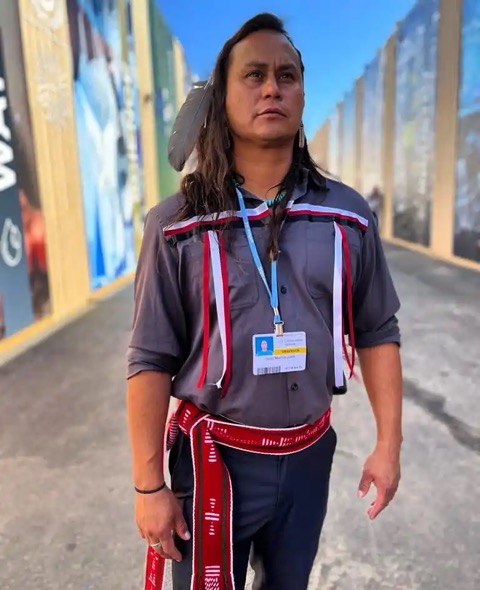
UUSC and UUCSJ Response to the Shooting of Indigenous Climate Activist Jacob Johns We are holding Jacob Johns, Indigenous climate activist, artist, musician, father, and Unitarian Universalist in great care and invite you to join us in supporting Jacob in his healing and organizing journey. Jacob was shot in the chest on the morning of Thursday, September 28, during a No Juan de Oñate statue peaceful protest in Tewa territory (more commonly known as Española, New Mexico) and is currently in the ICU. This protest was in response to local plans to build a conquistador monument. There are two ways you can financially support Jacob during this most difficult time and through the long haul of recovery
- Via the GoFundMe platform which has been launched for Jacob: https://gofund.me/0a63153a
- Via the Backbone Campaign, in support of Jacob’s ongoing Community Supported Organizing page, where tax-deductible donations can be made: https://www.backbonecampaign.org/jacob
Some news articles (though there's quite a few out there now) https://www.abqjournal.com/news/man-shot-during-juan-de-o-ate-statue-rally-in-espa-ola/article_946dcd3c-5e2d-11ee-9363-97e4e793df8a.html#1 https://sourcenm.com/2023/09/28/trump-supporter-shoots-someone-attending-peaceful-rally/ https://news.yahoo.com/sheriffs-official-ids-suspected-shooter-233400729.html Deb Cruz President, JUUstice Washington
JUUstWA Signs on letter to Biden on the Endangered Species Act
On August 17, 2023, JUUstice Washington Board member approved signing a letter generated by Earth Justice concerning the draft rule changes regarding the Endangered Species Act. During his tenure, former President Trump rolled back a number of regulations that put the Endangered Species Act in jeopardy. President Biden has proposed to put several of those rolled-back regulations back in place; however, has left several of them in place yet. The letter calls on President Biden to restore more of the regulations and strengthen the ESA once again.
We are writing to provide comments on three proposed regulations under the Endangered Species Act (“ESA”) by the Fish and Wildlife Service and the National Marine Fisheries Service (“The Services”). Proposed rules to address harmful regulatory changes made in 2019 that undermined ESA implementation are long overdue, and we welcome this process to finally make needed revisions. The proposed rules would reverse some of the damage done to ESA implementation by the 2019 rules, and we urge you to quickly finalize those important changes. Disappointingly, the proposed rules fail to fully restore the ESA, and we urge the Services to make additional needed changes that have been detailed in public comments dating back to the original 2019 regulatory process, including those detailed below.
Over the past five decades, the ESA has been remarkably successful: 99% of species protected under the Act have not gone extinct. The ESA has also protected millions of acres of habitat: forests, beaches, rivers, and wetlands that species rely on to survive and recover. At the same time, we are facing a growing biodiversity crisis. Human activity has put over a third of the plants and animals in the U.S. at risk of extinction and biodiversity loss is occurring at an unprecedented pace, underscoring why restoration of the ESA’s full potential is more important than ever. The biodiversity crisis means fewer pollinators for agriculture, depleted fisheries, and disappearing places like old-growth forests and wetlands that provide a long-term, low-cost source of clean air, water and carbon storage.
The Endangered Species Act is the best tool we have to fight the global extinction crisis and the key to protecting at-risk species in the U.S.. With these proposed regulations, the Biden administration has taken a few steps toward restoring the purpose and power of the Endangered Species Act, including the return of default protections for threatened species within Fish and Wildlife Service jurisdiction under section 4(d) of the ESA. This is a common sense and efficient policy that has worked for decades and one that we urge the Fish and Wildlife Service to finalize quickly.
Disappointingly, the draft regulations fall short of restoring ESA implementation to its full strength. The Services must take this opportunity to ensure the final rules bring the ESA regulations back to where they were pre-2019, which means correcting a number of glaring failures in these proposed rules. Detailed comments submitted via the Federal Register notice will provide a full description of all needed changes to the draft regulations. Below are several key examples.
The Services must go back to the drawing board and fully restore section 7 of the ESA, which governs interagency consultation — how federal government agencies ensure that federal actions do not cause imperiled species to go extinct or destroy protected habitat. For 50 years it has been established that the federal government should not engage in activities that could jeopardize species' survival or destroy habitat they need to survive and recover.
Specifically, we ask that you rescind the addition of “as a whole” to section 402.02. This language created an enormous loophole, inconsistent with the intent of the ESA itself. The nefarious “as a whole” language is a free pass to destroy critical habitat as long as the total destruction of a species’ entire critical habitat is avoided. This is especially damaging for wide-ranging and migratory species, from piping plover to marbled murrelet, from salmon to lynx. This language also ignores the cumulative impact of various causes of habitat destruction over time. And it goes against the science-based establishment of critical habitat to ensure both the species survival and recovery, instead treating some areas of critical habitat as expendable.
Additional section 7 definition changes from the 2019 rules that need to be reversed include one that creates unnecessary confusion when examining an agency action that is ongoing, or a continuation of past activities (“environmental baseline” section 402.02).
Regarding the proposed regulations for Section 4 of the ESA, the Services are weighing whether to keep a slightly modified regulatory definition of “foreseeable future,” in section 424.11(d) or to rescind the definition in its entirety. The current proposed definition could make it harder to protect species threatened by climate change by potentially allowing an administration to claim alleged scientific uncertainty to deny protections for climate-impacted species. We urge the Services to include language that would require projecting effects over the longest possible period for which credible projections are available. Barring that result, the Services should simply rescind the definition.
The Services must also rescind a Trump-era provision in section 424.12 making it easier to deny protecting a species’ habitat at the outset. Struggling plants and animals with designated critical habitat are more than twice as likely to recover than species without it. By retaining the expanded set of circumstances when designating critical habitat would automatically be “not prudent,” the Services will continue to significantly set back recovery efforts for animals like the northern long-eared bat–which is being decimated by white-nose syndrome, but also suffers from ongoing threat of habitat loss.
The Services also must reverse damaging changes made in section 424.11(e) that allow plants and animals to be prematurely delisted. It is essential that a species’ recovery meets all science-based standards before removing the backstop of ESA protections that have kept so many species alive.
Many of the changes to ESA regulations made in 2019 weakened protections for threatened and endangered species at a time when we must be doing everything in our power to fight the biodiversity crisis and recover species from the brink of extinction. Despite the broad support for restoring and strengthening the rules that implement the Act, the Services failed to do everything within their authority to restore the ESA rules and protect imperiled species.These three examples demonstrate just some of the additional changes that are needed before these proposed rules are finalized. Now is the time to get this right; we have no more time to waste.
JUUstWA Signs onto NGO ltr on the Columbia River Treaty
Association of Northwest Steelheaders ● Boulder-White Clouds Council ● Center for Environmental Law and Policy ● Columbia Riverkeeper ● Deschutes River Alliance ● Earth Ministry/Washington Interfaith Power & Light ● Federation of Western Outdoor Clubs ● Faith Action Network ● Great Old Broads for Wilderness ● Greater Hells Canyon Council ● Idaho Conservation League ● Idaho Rivers United ● Idaho Wildlife Federation ● JUUstice Washington ● League of Women Voters of Washington ● Native Fish Society ● Nimiipuu Protecting the Environment ● Northwest Guides and Anglers Association ● Oregon Coast Alliance ● Oregon Wild ● Portland Audubon ● Save our Wild Salmon Coalition ● The Lands Council ● WaterWatch of Oregon ● Washington Wildlife Federation ● Washington Wild ● Wild Orca ● Wild Steelhead Coalition ● Snake River Waterkeeper ● Sierra Club
Front and Centered comments on WA's Cap & Trade
https://www.youtube.com/watch?v=wxVwR8RQCeY&t=4s
Sound the Alarm!
Watch this video of a recent massive mobilization call to alert allies and friends from coast to coast that Wet’suwet’en people need their help to Stop The Drilling under their sacred headwaters, Wedzin Kwa. Attendees will hear from Sleydo’, Chief Na’Moks, and Chief Woos about what’s happening right now on the Yintah. You’ll hear about the violence, surveillance and intimidation that is escalating on Wet’suwet’en territory, and what they can do to help stop the drilling and call off the RCMP. https://youtu.be/XBMji4358vI
State Action is Crucial
On December 19, 2021, Senator Joe Manchin of West Virginia announced that he would not support the Build Back Better bill (BBBB), which contained a number of climate actions as well as social programs. The Biden Administration has worked with Senator Manchin and other legislators on compromises to make it possible to pass BBBB to no avail. As one of the Board Members of the UU Ministry for Earth, Doris Manchin, stated, "Joe Manchin announced that he will not support Build Back Better. Which only means that STRENGTHEN LOCAL CLIMATE COMMITMENTS (the work of cities and states and industry / sectors)" is even more important. If you are not already involved, please sign up here.
Conference of Parties (COP) of the UN Framework Convention on Climate Change
The 27th annual Conference of Parties (COP27) of the UN Framework Convention on Climate Change (UNFCCC) took place in Sharm El Sheik, Egypt on November 6 – 18, 2022. The agenda and numerous other documents for the COP are available here. The main issues of COP27 were (1) member parties’ emissions reductions and (2) loss and damage. A summary of the COP by Earth Negotiations Bulletin with some of the significant decisions highlighted is here. "Loss and damage" involves the costs to member parties such as Pakistan of climate events (e.g., flooding) that are triggered by the rise of emissions from other member parties such as the U.S. and Europe. Many small island states, such as Tonga and Tuvalu, are also pushing this issue because of sea level rise. Some European countries (e.g., France and Germany), the US and the EU have pledged to fund reparations for loss and damage. There will be pressure on the US to increase funding for reparations and this could become an issue in Congress, as described here. With Republican control of the House, it will require considerable pressure to get the funding. But before January, 2023, Democrats will retain control during a lame duck session and it may be possible to get Congress to support, for example, funding the US Fair Share of the Green Climate Fund (GCF). US funding on reparations will not come up in the immediate future because the loss and damage fund is not established - that will be left to a 24-member committee to report to COP28 in Dubai. The 2015 Paris Agreement set up a methodology for member parties to declare their annual emissions and announce new (lower) targets for future years. These “nationally determined contributions” (NDCs) are reviewed every five years; they were reviewed in Glasgow in 2021 (the 2020 COP was cancelled due to the pandemic). Many, including the US, EU and China announced new targets for 2030; the US NDC for 2030 is 52% below 2005 levels and many other parties also pledged a 50%+ reduction. This is in line with the findings of the Intergovernmental Panel on Climate Change (IPCC) that keeping temperature rises below 2C will require halving emissions by 2030. COP27 was an opportunity to determine if parties are keeping to their commitments and are on track to lower emissions this fast. A number of parties complained at the COP that the world is not on track and urged more action. The EU in particular urged that all parties including developing countries increase ambition and hinted that financing, e.g. for loss and damage, might be contingent on all parties stepping up reductions. Only if the vast majority of parties commit to at least 50% reductions by 2030 can the breach of temperature limits be avoided. One issue that continually arises at the COPs is fossil fuel production. In Glasgow, COP26 introduced the text "phase down of unabated coal power and phase out inefficient fossil fuel subsidies" after fierce debate about what that means. Many parties wanted text to read "phase out" of all fossil fuels but Saudi Arabia and other parties vetoed that. The term "unabated" was used to allow parties to claim that they were offsetting coal production with carbon capture and storage. The term “inefficient” was added to allow parties to claim that they were using sound financial means of funding fossil fuel production. These terms are in the COP27 decision but are likely to be contentious is future COPs. NOTES
- Washington State is not directly a party to the climate change agreement, but we are a member of America is All In, an organization that represents states, cities and private organizations at COPs.
- At the COP26 in 2021, a number of side agreements were made among governments, businesses and civil society. Agreements were made on coal, methane, fossil fuel subsidies, oil and gas production, deforestation and finance. Since the U.S. did not join all of them, you can take action using the information here.
Continue reading
Environmental Priorities for 2022 Legislative Session
The Environmental Priorities Coalition, which includes environmental groups such as the Washington Environmental Council and the Sierra Club, and faith groups such as Faith Action Network, met recently to set priorities. A tentative list of 2023 priorities include salmon recovery, housing affordability and density, recycling, water, forests and land use. There are still issues pending from the 2022 session. The following is a list of top priorities for 2022, that may recur as bills in 2023:
Salmon Recovery (SB 5665)-- From the coast to Puget Sound to the Snake River, bold action to recover endangered salmon populations across the state.
Unfortunately, this bill is dead for the 2022 session because of landowner opposition. It may be revised and reintroduced at the 2023 session.
Fighting Sprawl to Protect Climate (HB 1099 and SB 5042) -- Futurewise-led Washington Can’t Wait campaign to pass two bills that will revise the Growth Management Act to better plan for climate and close development loopholes that exacerbate urban sprawl. SB 5042 has passed both the Senate and House and was signed by the governor but 1099 has not been forwarded to the Governor for signature. It will be reintroduced in 2023.
Clean Buildings (HB 1767 and SB5666) -- Buildings are WA’s fastest growing source of climate pollution. Action is planned to expand the availability of incentives for utility customers to switch from fossil fuels to clean electric appliances. Both bills failed to pass and may be reintroduced.
Hearings: January 14, 2022. House Environment and Energy Committee: Notes on the hearing are here. Also, on Feb. 17: Hearings in House Committee on Environment & Energy on SB 5722, a similar bill.
Buy Clean Buy Fair (HB 1103 and SB 5366)-- State investments should support manufacturers who utilize clean manufacturing practices and strong labor standards.
In addition, the following bill failed in 2022 but could be 2023 priorities:
Housing Equity and Proximity to Transit (HB 1782) – create additional middle housing near transit and in areas traditionally dedicated to single-family detached housing.
Hearings: January 18, 2022: House Committee on Local Government: Hearing Notes Here
Senate Committee on Housing & Local Government has approved the Senate companion bill SB 5670, but both bills missed the March 4 cutoff and are dead for the 2022 session but could be reintroduced in 2023.
Continue reading
Join a Unitarian Universalists for a Just Economic Community Task Force
 The UUJEC is, of course, very interested in democracy. We need more of it in our own operations. Participating in a task force that conducts our work is a good way for you to promote justice in the denomination and in the world.
Please, examine this task force list to decide where you can make your best impact on the world. When you find one (or two), click on the adjacent survey monkey link. Ehttps://www.surveymonkey.com/r/9CSTZM3ach link opens an eight-question survey that asks when and how you can meet with other interested members.
Program Task Forces:
The UUJEC is, of course, very interested in democracy. We need more of it in our own operations. Participating in a task force that conducts our work is a good way for you to promote justice in the denomination and in the world.
Please, examine this task force list to decide where you can make your best impact on the world. When you find one (or two), click on the adjacent survey monkey link. Ehttps://www.surveymonkey.com/r/9CSTZM3ach link opens an eight-question survey that asks when and how you can meet with other interested members.
Program Task Forces:
Health Care Leader: Judy Deutch https://www.surveymonkey.com/r/9CSTZM3
The Health Care Task Force works for health equity. We're concerned about access to health care and the quality of health care. This task force works with the UUA to implement the Action of Immediate Witness, COVID-19 Pandemic: Justice, Healing, Courage. As part of this program, we support Medicare for All and congregation-based organizing for personal and social wellness.Green New Deal Leader: Lucy Hitchcock https://www.surveymonkey.com/r/9YZVWSP
The Green New Deal task force explores and educates on the natural, industrial, social, political and economic causes and consequences of climate change and the actions of prevention and restoration in which we can engage. The GND task force sponsors a webinar once a month, assembles resources on our web pages, and invites participation in our work and community.Reparations for Racism Leader: Carl McCargo https://www.
Housing Justice Leader: Sally Gellert https://www.
Continue reading
Tell US Senators to VOTE NO on HR 1374
 The Lakota People’s Law Project has put out a call to action to advocate against HR1374, the “Enhancing State Energy Security Planning and Emergency Preparedness Act of 2021” – a bill that has already passed in the House and is heading to the Senate. This bill would worsen the already dangerous and complex dynamics of state-backed and corporate-funded violence against and criminalization of water protectors.
More Information
The Lakota People’s Law Project has put out a call to action to advocate against HR1374, the “Enhancing State Energy Security Planning and Emergency Preparedness Act of 2021” – a bill that has already passed in the House and is heading to the Senate. This bill would worsen the already dangerous and complex dynamics of state-backed and corporate-funded violence against and criminalization of water protectors.
More Information
Continue reading
CARBON DIOXIDE LEVELS REACH PEAK IN 4 MILLION YEARS, WHAT THIS MEANS FOR CLIMATE CHANGE
According to the National Oceanic and Atmospheric Administration (NOAA), the amount of carbon dioxide (CO2) in the Earth’s atmosphere reached 419 parts per million in May. These are the highest carbon dioxide levels in over four million years.
The last time that the atmosphere held comparable levels of CO2 was during the Pliocene period, when the Earth looked completely different from what it does today. Sea levels were 78 feet higher, temperatures were 7 degrees Fahrenheit warmer and large forests covered parts of the Arctic tundra.
What do these record CO2 emissions mean for climate change? The atmosphere acts as a heat-trapping blanket. Greenhouse gases, like CO2, keep temperatures on Earth comfortable for human survival.
Read more here.
Continue reading
Governor Signs Climate Bills
Governor Inslee signed several of the big environmental bills
of the 2021 session on Monday, May 18 in Seattle at various locations.
Bills included SB 5126 (the Climate Commitment Act),  HB 1091 (Clean Fuels);
and SB 5141 (HEAL Act). He vetoed provisions in 5126 and 1091 that would have made them contingent on passing a 5 cent per gallon gas tax.
Continue reading
Zero Emissions Vehicles HB 1287
The legislature passed HB 1287, the zero emissions vehicle (ZEV) bill, after it was amended to “establish a goal that all publicly and privately owned passenger and light duty vehicles of model year 2030 or later sold, purchased, or registered in Washington state be electric vehicles, contingent upon vehicle participation in a new road usage charge or equivalent tax or fee policy.” Note that is a “goal,” not a mandate, and it is contingent on a new road usage charge for electric vehicles (to fund transportation like the gas tax does). Because of this contingency, Governor Inslee vetoed provisions of the bill referring to the 2030 goal. Other provisions remain intact, including some that require the state to plan for increases in electric vehicle chargers.
Continue reading
2nd Call for Support: Bring Sk'aliCh'elh-tenaut Home!
Netse Mot: Support Lummi Nation and Xw’ullemy (the Salish Sea)
2nd Call for Support: Bring Sk'aliCh'elh-tenaut Home!

Have you?
Continue reading
Red Road to DC Totem Pole Journey

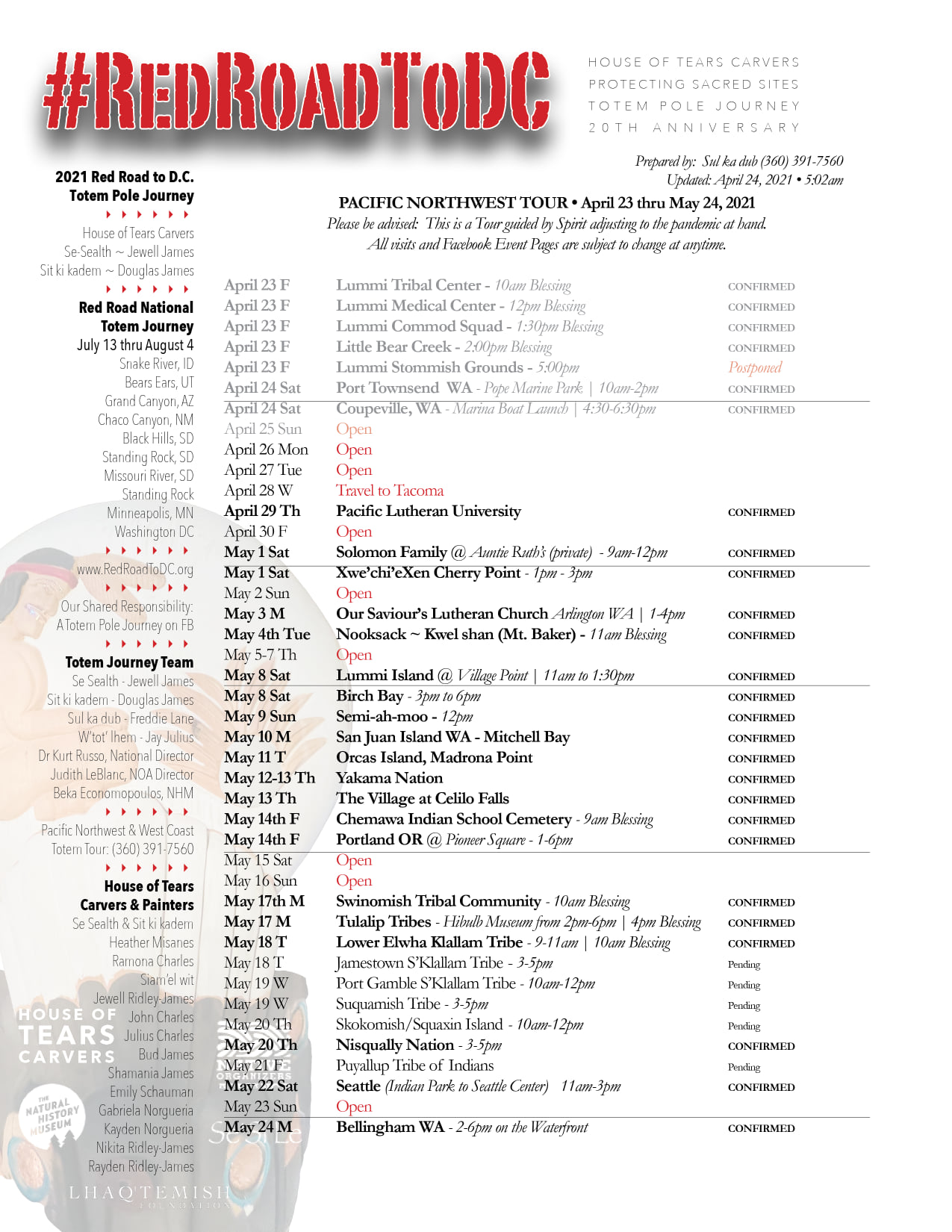
Continue reading
Netse Mot: Bringing Sk'aliCh'elh-tenaut Home!

Netse Mot 2021-Call to bring Sk'aliCh'elh-tenaut Home
2021 will focus on the return of Sk'aliCh'elh-tenaut (Tokitae/Lolita) to the Pacific Northwest from Miami Seaquarim in Florida. In the 1970s Southern Resident Orca youth were forcibly and violently taken from their pods and shipped out to aquariums and parks all over the world. Sk'aliCh'elh-tenaut (Tokitae/Lolita) was taken to Miami Seaquarium where she is the last surviving Orca youth taken. Lummi Nation has been trying for decades now to have her returned but Miami Seaquarim is refusing to release her. In 2019, two Lummi women, Squil-le-he-le and Mah Tahs working with Earth Law Center, invoked the Native American Graves Protection and Repatriation Act (NAGPRA) and announced their intent to sue Miami Seaquarium if the Seaquarium. To date (April 2021), Miami Seaquarim is still refusing to release Sk'aliCh'elh-tenaut. Squil-le-he-le and Mah Tahs are calling upon us to respond as well.- For individuals, they are asking that we sign the petition established by Earth Law Center that is collecting signatures to go to Miami Seaquarim and its parent and affiliates—Palace Entertainment and Parques Reunidos Servicios Centrales SA.
- For groups and organizations, they are asking that we sign a request to Governor's Inslee (WA) and Brown (OR) and BC Premier John Horgan to sign a proclamation to support the efforts to bring her home. Please sign by 24 May 2021. We'd like to present it to the Governors in June during Orca Action Month.
- We are also being asked to reach out to other Indigenous connections we may have and invite them to sign the Indigenous Statement of Solidarity. The request also includes a video of ceremonies in solidarity. If you have connections with an Indigenous group, please ask them to contact Julie at info@sacredsea.org.
Continue reading
SB 5126 Climate Commitment Act
JUUstice WA has not made the Climate Commitment Act a priority because there is some opposition from frontline communities on equity issues (see the detailed hearings report, below). Some members have asked about the bill, so it is described here. It passed the legislature with amendments to meet some of the objections of frontline communities. The “Cap and Invest” program directs Department of Ecology to set a cap on emissions and set rules for compliance. Allowances are used to invest in clean energy projects. By 2022 Ecology must set caps and rules for allowances. Reductions begin in 2023 and are made more stringent during each period. The caps are set on a sliding scale according RCW 70.235 as follows:
- By 2030, reduce overall emissions of GHGs in the state to 45 percent below 1990 levels,
- By 2040, reduce overall emissions of GHGs in the state to 70 percent below 1990 levels,
- By 2050, reduce overall emissions of GHGs in the state to 95 percent below 1990 levels,
Continue reading
UUs and Elders Build Momentum for Drawdown Initiative, Now to June 2021
 For the past few weeks, UU Ministry for Earth and Elders Climate Action have been busy with the UU Project Drawdown Initiative 2021. UU DD 21 mobilizes teams or individuals to earn points for taking a variety of actions for climate and environmental justice. You can SIGN UP and take part in the challenge at any time until June, when the collective efforts will be compiled in a video to be shared and celebrated at UUA General Assembly. Get inspired with these highlights of progress so far.
Continue reading
Presentation on Environmental Justice
Watch Robert Colón's amazing presentation on Electric Vehicles, Smart Growth, Environmental Justice, and Avoiding Eco-Colonialism.
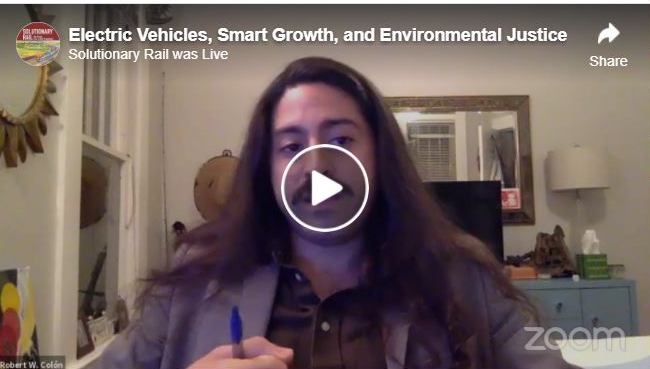
Watch it by clicking here: SolutionaryRail.org/
(Move the scroll bar to start at the 6 minute mark to bypass the initial tech set up delay.)Continue reading