
Last year Black Lives of Unitarian Universalism (BLUU) began a partnership with Love Resists. Bail keeps people in jail for weeks and even years—away from their families, friends and communities—before they see a judge. Bail traps people in debt, can mean a loss of custody of children, stable … [Read more...]
GONE BUT NOT FORGOTTEN The Untold Stories of Jail Deaths in Washington
Columbia Legal Services, May 2019 A punitive and inequitable model that holds people who have not been convicted of any crime simply because they cannot afford bail; a model that condemns people fighting mental illness and cognitive disabilities to serve days, weeks, or months for behaviors … [Read more...]
Hundreds of Unitarian Universalists protest new Spokane Co. Jail
KREM's Alexa Block said Unitarian Universalists Association leaders estimated there were about 1,000 to 1,250 protesters. Author: Ian Smay, Alexa Block Published: 12:58 PM PDT June 20, 2019 Updated: 8:13 PM PDT June 20, 2019 SPOKANE, Wash. — The Unitarian … [Read more...]
Pretrial Reform Task Force Results and Recommendations
The Pretrial Reform Task Force was convened by the Washington State Minority and Justice Commission, the Superior Court Judges’ Association, and the District and Municipal Court Judges’ Association in June 2017. The Task Force examined current pretrial practices in Washington and developed … [Read more...]
Reforming Debtors Prison in Washington State makes sense (and dollars!)
On a given day in Washington State, up to 50% of the people in county jail are there because they are poor. Cash bail enforces a guilty until proven innocent structure on the poor. It does not have to be this way. According to 2019 studies by the Washington State Auditor, bail alternative … [Read more...]
2019 Preliminary Summary of Legislation Passed by the Washington State Legislature
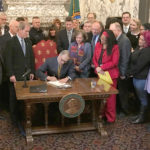
Pretty impressive document. Issued by the Office of Program Research Washington House of Representatives and published on April 29, 2019. Read more here . . . … [Read more...]
Washington likely won’t abolish the death penalty this year
MyNorthwest By Hanna Scott, APRIL 18, 2019 AT 4:07 PM The bill to officially end the death penalty in Washington state failed to get a vote ahead of Wednesday’s deadline. . . . That left three possibilities for the Legislature: fix the law, abolish it, or leave the law on the … [Read more...]
Washington Supreme Court strikes down state’s death penalty, saying it is ‘arbitrary and racially biased’
Washington Post By Mark Berman October 11, 2018 The Washington state Supreme Court on Thursday unanimously struck down the death penalty there as unconstitutional and “racially biased,” a ruling that makes it the latest in a string of states to abandon capital punishment in recent years. . … [Read more...]
Community Listening Forums on Implementing I-940 to Improve Police Procedures, May 2 and 8, Kent and Seattle WA
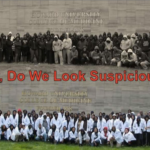
Initiative 940 is officially law in Washington State. However, the road towards implementation has just begun. We have an opportunity to speak up on how this law is shaped and practiced. Two very crucial components are being developed: law enforcement training and independent investigations (when … [Read more...]
Accomplishments of the 2019 Legislative Session
The 2019 Legislative Session is officially over. First, we’d like to recognize the hard work of all of you—our advocacy community. This legislative session was an important one, and because of your action, a number of critical policies (plus an entire 2 year operating budget!) are now a reality. … [Read more...]
Hone Your Justice Skills at GA, June 19-22, Spokane WA

You can register here. THURSDAY, JUNE 20 10 am-12 pm - Effective and Relational Justice Work in UU Spaces Offered by UUs for Social Justice in the Middle East Social justice work is central to Unitarian Universalist identity and is often controversial. UU activists must be effective in … [Read more...]
Urge Your Representative to Bring Death Penalty repeal Up for a Vote
We have just 24 hours left to bring the Death Penalty Repeal bill (SB 5339) up for a vote on the House floor by 5 PM on Wednesday, April 17. Your Representative has the power to bring it to the floor - please ask them to do so as soon as possible! The Supreme Court decision is not enough. It was … [Read more...]
East Shore UU in April: Programs Centering Marginalized Voices
A relatively new phenomenon at East Shore is the Alternative Service Co-op, an attempt to deepen our spirituality by centering marginalized voices. In November, they produced a 9:00 am service centering the homeless men staying at our church. In February they produced a Black History Month … [Read more...]
Your Gift Empowers Us All

Reach beyond the mundane Contribute, today Now is the time to help us reach beyond the mundane. Our vision to empower people, with a new and more powerful thrust, to build a just world in which all people thrive. By supporting JUUstice Washington right now, you will be helping us to achieve … [Read more...]
Death Penalty Reform
UU perspective on Capital Punishment - as early as 1974 BE IT RESOLVED: That the 1974 General Assembly of the Unitarian Universalist Association continues to oppose the death penalty in the United States and Canada, and urges all Unitarian Universalists and their local churches and … [Read more...]