Farmworker leaders from Community to Community Development and Familias Unidas por la Justicia have been in Olympia this month supporting bills concerning much-needed oversight of the H2A guestworker visa program. Take action to make sure this bill becomes a law! C2C has been demanding increased … [Read more...]
House Committee on Public Safety Hearing on Improving law enforcement response to missing and murdered Native American women
The House Committee on Public Safety held a hearing on February 12, 2019, and the House passed on March 5, 2019, HB 1713, improving law enforcement response to missing and murdered Native American women. Staff reported that the State Patrol will conduct studies, working with tribes, and report on … [Read more...]
Why Are So Many Native American Women Abused, Missing and Murdered?
Take action! Go to the website below read the bill and comment on this legislation. "At the state level, Republican Rep. Gina McCabe introduced a House bill in Washington State that would bring the federal, state, and federally recognized sovereign tribal governments together to ensure that … [Read more...]
Initiative 1000 qualifies for legislative action
The Initiative 1000 campaign on January 4, 2019, submitted more than 387,000 signatures to the secretary of state’s office. If I-1000 qualifies, it could be approved during the current legislative session or could be sent to the November ballot. Initiative 1000 would change Washington state law to … [Read more...]
Hearing of House Housing, Community Development & Veterans Committee on homelessness bills 1219, 1377, 1406 and 1207
The state legislature’s Housing, Community Development & Veterans Committee passed four homelessness bills (described below). These bills would enable local communities and religious organizations to develop affordable housing using existing tax bases. … [Read more...]
Senate Committee on Indian Affairs passes three bills for Indian Country
Bills approved concern Native languages, Native veterans, and tribal economic development Indian Country Today (Press Pool) News Release: Senate Committee on Indian Affairs (Feb 2019) Senator John Hoeven (R-ND), chairman of the Senate Committee on Indian Affairs, announced that the … [Read more...]
Futurewise overview and recommendations on upcoming housing legislation
We're a month into the legislative session and it's heating up, with a host of bills related to minimum density, accessory dwelling units and urban growth expansions being considered. Let's dive in with a few key bills: SB 5440, SB5353, SB5424, SB5384, HB1213 … [Read more...]
Support House Bill 1603/Senate Bill 5684 to Reverse Punitive Family Policies
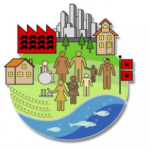
WorkFirst program cuts over the last decade are hurting low-income families. During the Great Recession, Washington state lawmakers implemented harsh sanction and time limit policies that have made it more difficult for families to receive the support they need. These program changes … [Read more...]
House Labor and Workplace Standards Committee on HB 1398, SB-5438
Ramon Torres, President of Familias Unidas por la Justicia and Rosalinda Guillen, C2C both testified Support House Bill- 1398 and Senate Bill -5438 You can take action on these bills by clicking on the links above, and then click on "Comment on this Bill." The comment link will take you to a … [Read more...]
Voices Vote for Dissolution
As many of you know, Washington UU Voices for Justice and Northwest UU Justice Network are evolving into JUUstice Washington. In order to make this transformation, Voices needs to dissolve the old organization. Voices will send out ballots in early January to vote on the dissolution. According to … [Read more...]
Washington Low Income Housing Alliance – Housing and Homelessness Advocacy Day
When: Thursday, February 28, 2019 Where: United Churches of Olympia and Capitol Campus REGISTRATION WILL OPEN IN JANUARY 2019 At Housing and Homelessness Advocacy Day, your voice is heard on some of the most pressing issues of our time: housing affordability and an end to homelessness. Be a … [Read more...]
Poverty Action’s 14th Annual MLK Lobby Day
When: Monday, January 21, 2019 • 9 am - 3:30 pm Where: St John's Episcopal Church, 114 20th Ave SE, Olympia, WA 98501 This Martin Luther King, Jr. Day, join Poverty Action members from across the state as we demand a more just Washington state. This MLK Day you will: Meet with your … [Read more...]
Lobby Day for a Free Flowing Snake River

Tuesday, February 5, 2019 at 9 AM – 3 PM Olympia State Capital Building 416 Sid Snyder Ave SW, Olympia, Washington 98501 Join us for the lobby day for a free-flowing Snake River in Olympia on Tuesday, February 5th. We will be meeting with Washington State Legislative representatives and … [Read more...]
Your Gift Empowers Us All

Reach beyond the mundane Contribute, today Now is the time to help us reach beyond the mundane. Our vision to empower people, with a new and more powerful thrust, to build a just world in which all people thrive. By supporting JUUstice Washington right now, you will be helping us to achieve … [Read more...]
The Corruption of Our Democracy – UUA Statement of Conscience Draft Commenting
Delegates at the 2016 General Assembly in Columbus, OH, selected "The Corruption of Our Democracy" to be the 2016-2020 Congregational Study/Action Issue (CSAI) of the Unitarian Universalist Association (UUA) of Congregations. Comments are being accepted on the draft statement of conscience and … [Read more...]
‘Justice for Jackie’ gets police use of deadly force bill onto Washington ballot
byFrank Hopper Sep 10 Puyallup supports the law limiting the use of deadly force by law enforcement in Washington state. When Puyallup Tribal member Jacqueline Salyers was killed by a Tacoma Police officer in January 2016, her cousin Chester Earl made a promise to Salyer’s … [Read more...]
Tribal leaders pitch Congress on farm bill, Violence Against Women Act
Tribal leaders pitch Congress on farm bill, Violence Against Women Act Sen. Mazie Hirono speaks to a packed room about issues in Indian Country. (Photo by Jourdan Bennett-Begaye) by Jourdan Bennett-Begaye (4 days) Members of Congress met with tribal … [Read more...]
- « Previous Page
- 1
- …
- 5
- 6
- 7