The head of a proposed copper and gold mine near a prime Alaska salmon fishery has resigned after covertly filmed videos showed him talking about elected and regulatory officials and unreleased plans for the huge project. Northern Dynasty, owner of Pebble Limited Partnership, announced the … [Read more...]
We lose more than salmon and orcas to the Snake River dams
My traditional name is O’ĉ’si’ii (oh cha see ee) and in my Qwidičča ɂ-tx (qua ditch cha uth) Makah language, it means “Lady of the Sea” or “Protector of the Sea.” If Tahlequah’s new calf and my family’s way of life are going to survive, we have to protect salmon. Returning to abundant salmon is … [Read more...]
New WA law helps Native voters this election. Is it enough?
Washington lawmakers passed the Native American Voting Rights Act last year, but they couldn't have expected the pandemic and wildfires to come. Leaders of the Confederated Tribes of the Colville Reservation are worried the challenges of the coronavirus and devastating wildfires may present too … [Read more...]
Tribe returns to Seaquarium for annual quest to bring whale home
KEY BISCAYNE, Fla. – Many believe that Lolita, the whale that the Lummi Nation knows as Sk’aliCh’elh-tenaut, is finally getting a much-needed break as the Miami Seaquarium has been closed to visitors since March because of COVID-19. This is the longest she’s gone without performing and Thursday … [Read more...]
Standing in Solidarity with Sk’aliCh’elh-tenaut
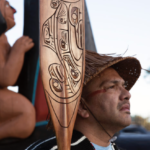
Please join us in standing in solidarity for Sk’aliCh’elh-tenaut at a virtual event on September 24th, the 50th anniversary of her captivity at Miami Seaquarium. From Lummi leaders Squil-le-he-le (Raynell Zuni) and Tah-Mahs (Ellie Kinley): We are traveling to Miami and holding ceremony as part … [Read more...]
Fires Burn Over 80 Homes, 180,000 Acres on Colville Reservation
OMAK & INCHELIUM — As of this print, the five fires that started during a wind event over the long Labor Day Weekend have destroyed over 80 homes and burned over 200,000 acres on the Colville Indian Reservation. . . . Each of the fires started on Sunday, Sept. 6, along with a number of … [Read more...]
“The Condor and the Eagle” film screening and fundraiser for Tokitae Fund of Lummi Nation’s Lhaqtemish Foundation

Join the Unitarian Universalist Ministry for Earth, the Bellingham Unitarian Fellowship and many other friends and allies as we come together virtually as people of faith and conscience to celebrate the Fall Equinox, watch this award-winning documentary, hear from the filmmakers & protagonists, … [Read more...]
Let’s Talk About Fossil Fuel Expansion in Tacoma: 350 Tacoma and Plans for More Crude Oil Tanks
Did you know that Targa Resources, a fossil fuel pipeline, fuel storage and transportation company, runs crude oil storage and terminaling facilities in Tacoma? Those are the huge tanks you can see along the Hylebos Waterway near the Port (2628 Marine View Drive). A few years ago, Targa (now under … [Read more...]
LUMMI FISHERMEN RETURN TO ANCESTRAL FISHING GROUNDS
Lummi tribal fishermen harvested salmon from Whatcom Creek in August, for the first time in at least 100 years. The chinook salmon were released as juveniles in 2017 from the Bellingham Technical College’s Fisheries and Aquaculture Science program’s hatchery, which works in partnership with … [Read more...]
A pipeline to nowhere? TC Energy’s bid to keep B.C. project alive frustrates residents in its path
But despite the fact the LNG terminal has been nixed, TC Energy isn’t giving up on its plan to build the pipeline. No other LNG terminals have been publicly proposed for the Prince Rupert area, but the company appears to be holding out hope that someone pitches one —and gets it … [Read more...]
Salmon People – A Short by Children of the Setting Sun
As the Ocean Encroaches, this Washington State Tribe Is Building Its Next Chapter
A growing number of tribal nations and intertribal organizations have adopted climate assessment and adaptation plans, according to the National Congress of American Indians. In Washington State, several tribes have included relocation as one of their adaptation strategies. . . . NRDC senior … [Read more...]
Sacred duty: Bring Sk’aliCh’elh-tenau home
Research by leading NAGPRA experts agree there is a strong case to be made that Sk’aliCh’elh-tenau qualifies for return under NAGPRA"Just to give a little background, under NAGPRA it requires the return of some Native American cultural items to the people that they came from. And Sk’aliCh’elh-tenau … [Read more...]
Trans Mountain says pipeline has restarted after crude oil spill in Abbotsford
Sumas First Nation Chief Dalton Silver said the spill happened just south of the Lightning Rock site, a cultural and burial ground of great significance to their people. He said it's the fourth time in 15 years that there has been a spill from the pipeline on their land. "Our main concern is … [Read more...]
Lawsuit Challenges EPA Rollback of Human Health Water Standards in Washington State.
Environmental groups, regional tribes and fishing organizations head to court in defense of community health and critical protections for the consumption of fish. Today, a coalition of organizations, in cooperation with regional tribes who have been leading this fight, filed a lawsuit to uphold … [Read more...]
Earth Law Center joins effort to free Sk’aliCh’elh-tenaut (Tokitae/Lolita) Press Conference
Earth Law Center joins effort to free Sk’aliCh’elh-tenaut (Tokitae/Lolita) Press Conference WHAT: A virtual press conference at which individual Lummi tribal members Tah-Mahs (Ellie Kinley) and Squil-le-he-le (Raynell Morris) will announce the next step of their work to bring Sk’aliCh’elh-tenaut … [Read more...]
‘Virtual’ Hearings Are Silencing Indigenous Voices in Alaska
Throughout April, in the thick of the COVID-19 pandemic, BLM held “virtual” public hearings to gather input on ConocoPhillips’ Willow Project, a massive oil-and-gas drilling plan that will transform a vast expanse of Arctic tundra into a sacrifice zone for industry. Earthjustice is representing … [Read more...]
When the Chehalis floods again, who pays the price?
Over the past few weeks, as the potential impacts of a dam have become clear, lines have been drawn between members of a group bound by state law to work together. The Chehalis Tribe has opposed construction of a dam on the river for years, and the Quinault Indian Nation declared its opposition to … [Read more...]
Tulalip lawmaker’s retirement caps long public service career
It’s easy to find high praise for Democrat John McCoy, Tulalip, within Indian Country or from members of his own party. But praise that comes from the other side of the aisle tells volumes about the relationships McCoy nurtured during his 17 years representing the 38th District — 40 miles north of … [Read more...]
Hope For Tokitae by Eleanor C. – SoundCloud
Moving audio interview by Eleanor C. With Kurt Russo of Lummi Sovereignty and Treaty Protection Office and Howard Garret of the Orca Network on Sk’aliCh’elh (Tokitae/Lolita). … [Read more...]
- « Previous Page
- 1
- 2
- 3
- 4
- …
- 6
- Next Page »